Sunday, April 24, 2022

Amazing Chinese Characters (497) Blow (music instrument) - 丂

 The shell bone script of Blow (music instrument) is


The simplest ancient music instrument, which is not exist now. We don't know what it looks like exactly, it could be the predecessor of Chinese traditional wind instrument 竽 made from bamboo。

The bronze script of the character is


The top is flat line now.

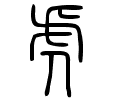
The small seal script of the character is 


The vertical line is curved, which means that the tube is not straight, is curved. The bamboo tube could be bent by heating it up in small area in certain degree, which could be done only by highly skillful and very experienced people. The curve makes the air flow not straight forward, creating a richful sound. 

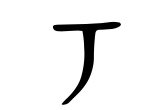
The standard script of the character is

The curve becomes sharp turns, changed the original meaning: curved air flow.

The pinyin of the character is Kao3 or Qiao3.

The character is not used as independent character any more. 《新华字典》even does't list it. It is OK for you not know it, but it is still exist in many compound characters, such as 巧,朽,号,考,兮,etc. To know its meaning will help you understand other characters. 

Tuesday, April 19, 2022

Amazing Chinese Characters (496) Worry - 虑(慮)

 The shell bone script of character Worry is

The top


is head of tiger (Post 492)

The bottom


is Think (Post 154). When you have a tiger in your mind all the time, you worry the tiger, you are anxiety.


The small seal script of the character is 


The top is the head of tiger, the bottom is character Think.


The clerical script of the character is


The head of tiger + character Think.


Simplified song typeface of the character 
Changed the bottom 思-Think to 心-Heart, close to original meaning, but not the same.

The Pinyin of the character is Lv. 


Wednesday, April 13, 2022

Amazing Chinese Characters (495) Wei (Surname) - 韦(韋)

 The shell bone script of character Wei is

The middle square is a city or town, the top and bottom are feet, soldiers on patrol for defending the city. 


The bronze script of the character is


The circle is the city, the top and bottom are feet. 


The small seal script of the character is


Similar to shell bone script.

The clerical script of the character is


Similar to small seal script. 


The simplified song typeface of the character is


Completely changed to almost no similarity to old scripts, it is from cursive script. The pictography is destroyed.


The original meaning of the character has been lost long time ago, which is replaced by character Guard (Post 149) - 卫(衛). The character is used a surname now. However, it is an important part or radical in compound characters, in which it keeps its original meaning, like character Guard 卫(衛), the middle is 韋, which means the soldiers on patrol, the outside is character Walk - 行 (Post 96), emphasizing the patrol. 


Understanding this character will help you to understand many characters with it.


Monday, April 4, 2022

Amazing Chinese Characters (494) Think - 想

There is another character Think - 思 (Post 154), I will discuss the difference between the two characters in the end of this post.

The big seal script of character Think is

The top is character Mutual - 相 (Post 376), the left is character Wood (Post 10), the right is character Eye (Post 17), which means that a person is looking at a wood. The bottom is character Heart (Post 24), which means that a person is looking at a wood, and thinking what is the best way to use the wood. Ancient Chinese thought the thinking is from either head or heart.

The small seal script of character Think is

 
Similar to big seal script, the top is character Mutual - 相, the bottom is character Heart - 心。

The clerical script of the character Think is

The top is Mutual - 相,the bottom is Heart.

The pinyin of the character is Xiang3.

The character 想 is exchangeable with 思, sometimes people just put them together to form a word 思想, which means Think too. But from the original pictography, there is subtle difference between the two. 

思 is more likely internal thinking, 想 is more likely external thinking, that is to watch something, then think.  思 may be more focus on abstract problems, more difficult, like math problems; 想 could be much wider, and easier problems, like to think if I should learn Chinese. 思 may involve more emotional feelings, 想 could be just Desire or Want some foods, or physical objects.

Anyway, they are very close, most Chinese have never thought what the difference of the two.


Sunday, April 3, 2022

Amazing Chinese Characters (493) Deficiency or Deficit - 亏(虧)

  The big seal script of character Deficiency or Deficit is 

Which is very similar to character At (Post 488), except the middle vertical line doesn't go through to the top short horizontal line. It means that the player doesn't have enough air flow to make the instrument to produce sound: the deficiency of the air flow. 
In comparison with character 乎(Post 489) and character 平 (Post 490), there are no dots, which are indicative of the air flow, between the two short horizontal lines.

Some people believe that the character is same as character At (Post 488), because the small seal script of character At


is so similar to big seal script. 

However, the small seal script of character Deficiency or Deficit is


The left top 

is the Tiger head. 
The bottom 
is Short Tail Bird (Post 107). 
The right part is the character At, here it means Deficit. A tiger that just ate a small bird is deficit of energy.

The clerical script of the character is
Similar to small seal script.

The song typeface of the traditional character is 
Same as the clerical script. 
The song typeface of the simplified character is 
Just the right of 虧.

The Pinyin of both characters is Kui1.

The simplified Chinese merged the two into 亏, eliminated 虧. But both existed in shell bone script. 


Amazing Chinese Characters (492) Head of Tiger - 虍

The shell bone script of radical Head of Tiger is

which is a head of tiger. Why? Let's see the shell bone script of character Tiger (Post 118)


We can see the head of tiger is same as the one above. The popular explanation for the character is Stripe of Tiger, which is obvious not correct by comparing the character Tiger.

The big seal script of radical Head of Tiger is
Some similar to shell bone script, but very close to the head of tiger in character Tiger of big seal script

The small seal script of radical Head of Tiger is

Almost same as the head of character Tiger


The clerical script of radical Head of Tiger is

Same as the top of character Tiger
The pinyin of the radical is Hu1.

The radical of Head of Tiger is not used as an independent character, but it is used with other radicals or characters to form new characters.


Thursday, March 31, 2022

Amazing Chinese Characters (491) Family Name - 姓

 The shell bone script of character Family Name is 


The left part is character Living (Post 352), here it means Producing or Giving birth. The right part is character Woman (Post 20). In the ancient time, people knew only who was their mother. Children from one mother are a family, they should have a same family name after mother's family name. 

No bronze and big seal scripts are found for this character, which is unusual because most of time, the shell bone script is lack because it is the oldest script, the bronze script characters are not many, it may be missing too. However, the big seal script characters are a lot. This is my first time to see character with shell bone script found, but not big seal script. 

The reason why the situation occurred is unknown. It may be the society changed to patriarchal society in which family is centered on father, the family name is after Father's family name. 

Matriarchal society in China when was about 10,000 - 6,000+ years ago, from about 5,500+ to 4,000+ ago, China was in patriarchal society, 500 - 2,000 years earlier than what the shell bone with shell bone script carved on was found. If the shell bone script of character Family Name was created in matriarchal society, the shell bone script would be pushed at least 500 years earlier, which needs experts to prove.

The small seal script of the character is


The left is character Woman, the right is character Living. The two flipped positions from shell bone script, which happened in character Good - 好 (Post 27).

The clerical script of the character is 


Similar to small seal script.

The song typeface of the character is

Same as clerical script.

The Pinyin of character 姓 is Xing4.

Tuesday, March 29, 2022

Amazing Chinese Characters (490) Flat - 平

 The bronze script of character Flat is

character At - 于 (Post 488) plus two dots, the middle is a long vertical line, a flow blow out smoothly, no tone change, a flat and continuous tone. In comparison with the bronze script of Modal Particle 乎 (Post 489), 


The top vertical lines disconnect with top and bottom two horizontal lines to indicate that the air flow is strong with rich variety of intermittent tones. 

The big seal script of the character is 

Similar to bronze script. 

Let's see the big seal of 乎 (Post 489)

Very similar but the middle top vertical short line is disconnected with top and middle horizontal lines.

The small seal script of the character is


An even, symmetrical Pi on the top, with means the air flow is even, smooth, no change. Let's compare with the small seal script of 乎 (Post 489)


Very similar to small seal script of character Flat, but the top uneven, unsymmetrical Pi, which means the air flow is rich variety. 

The clerical script of the character is

Very symmetric, which means the air flow is even, continuous, and flat.

Compare to character 乎
Not flat horizontal line on the top indicates the air flow is not even, intermittent. 

The Pinyin of character Flat - 平 is Ping2.


Amazing Chinese Characters (489) Modal Particle - 乎

There are many modal particles in Chinese, today I introduce one of them.

Its shell bone script

The horizontal line is a bamboo tube of Chinese ancient wind music instrument (Post 488). The long vertical line is the blowing mouth and tube. The top three short lines are air flow from the tube strongly, which means that the sound is high and loud. The top line is missing, which may be different but similar instrument

The bronze script of the character is


Similar to shell bone script, but an extra horizontal line on the top, which may be a movable cover, the out air flow is strong to lift it up high.

Let's compare it with character At - 于 (Post 488)


No dots at all, which means that there is no air flow, just a music instrument idle there.

The big seal script of the character is

Similar to bronze script.

The small seal script is 

Similar to older scripts, but the top becomes unsymmetrical Pi, which may mean the flow is uneven.

The clerical script of the character is
Changed a lot, more like big seal script. 

The Pinyin of the character is Hu1.


Monday, March 28, 2022

Amazing Chinese Characters (488) At or Prepositions - 于 (於)

 The shell bone script of At or Similar Prepositions is

 
an ancient wind instrument made from bamboo.
 
 
The horizontal lines are bamboo tubes, and the vertical bent line is the blowpipe.
 
There is another shell bone script of the character 
 

The left top is mouth (see Post 152), the left outside is the bamboo tubes or other materials, inside is the music wind tubes (the script we talked above), the right part is a hand playing the sound holes. The 于 inside is free reed.

The bronze script of the character is
 
similar to shell bone script.
 
The big seal script of the character is
similar to older scripts.
 
The small seal script of the character is
 

the blowpipe becomes two turning curves, but the top two short horizontal lines are not connected, which some experts think that the character is Deficit or Deficiency: the air flow is not strong enough to make sound. I will discuss the character Deficit in a different post.

The other script for the music instrument is 

a bamboo head is added over the 亏 to indicate that is made from bamboo, which is instrument, not an adjective.

 
The clerical script of the character is

similar to older scripts except small seal script. Right now the meaning of the character is not music instrument any more. 

 
Another clerical script of the character is
 

which is the wind music instrument, the original meaning of the character. 

The song typeface of the character is
 
于 - 宋体字
 
The pinyin of both character is Yu2.
 
Let's take a look another character with the same meaning.
 
The bronze script of the character is
 
The left is a bird, the right is a person who flys as a bird.
 
The big seal script of the character 
The left is character Square, which should be a mistakenly written for the bird, we can see some similarity between the two. The right top is character Person, the bottom 二 is the sky or clouds (Post 206). The character means that a person flys in the sky above the clouds like a bird.
 
The small seal script of the character is
 
The left is similar to shell bone script, the right is similar to big seal script.
 
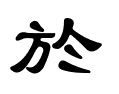
The clerical script of the character is

Similar to big seal script.

The song typeface of the character is
 
Same as the clerical script, which is the traditional character for 于.
 
The Pinyin of the character is Yu3.
 
The meaning of character 於 gradually become At, On, Of, To, From, In, and many other Prepositions. Because its pronunciation is same as character 于, so it has replaced the character in most of times in traditional Chinese. However, in simplified Chinese, 于 substitutes 於, the latter is eliminated. We can't say that 于 is simplified form of 於, because both existed since shell bone script. They just merged into 于 in simplified Chinese.