Wednesday, October 26, 2022

Amazing Chinese Characters (540) Burn - 焚

 The shell bone script of character Burn is 

The top is character Forest - 林 (Post 10), the bottom is character Fire - 火 (Post -26). Set fire on wooks -  is Burn. 

The bronze script of characte Burn is

Similar to shell bone script.

The big seal script of character Burn is

The top are character Forest -林 + two X in between, the bottom is character Fire. What are the two X? They are dropped off branches on the ground or hanging on the trees. 

We can recall the Xs in character Learn - 学 (Post 66) 

and character Teach - 教 (Post 155)

Both the two Xs are wood sticks used by students to count numbers. So X is wood stick.

The small seal script of character Burn is
Similar to big seal script.

The clerical script of character Burn is

The top is Forest, the bottom is Fire.

The Pinyin of character Burn is Fen2. 


Amazing Chinese Characters (539) Especially - 尤

 The shell bone script of character Especially is

The bottom

is character Again (Post 102), original means hand, the middle curve down is arm, and the falling left line is the palm. Character Especially has an extra line on the top, which means extra fingers or palm, either is not normal. Ancient Chinese believed that the person who has a strange hand, more fingers or more palm is a special one who is especially powerful.

The bronze script of the character is

Similar to shell bone script.

The small seal script of the character is
which is not clear if it is a person with big hand or a stange hand, I prefer the former.

The clerical script of the character is

No similarity to older scripts.

The pinyin of the character is You2.

尤 normally means something especially good. 


Thursday, October 20, 2022

Amazing Chinese Characters (538) Celebrate - 庆(慶)

 The shell bone script of character Celebrate is

A deer and its heart which is emphasized by visible from outside. In ancient, the deer was a fetish, could bring happiness and longevity to people. 

Deer heart means that people got the blessing from deer.

The bronze script of character Celebrate is


The top is deer head, the horizontal U is deer body, the heart is inside the body, the bottom is a deer foot.

The big seal script of character Celebrate is
Similar to bronze script.

The small seal script of the character is
Some similarity to the big seal script, the head and foot are different, especially the left vertical long line is new.

The clerical script of the character is
Some similarity to small seal script, the top 山 becomes a dot, the middle heart changes to 心 - meaning heart. 

The Pinyin of the character is Qing4. 


Wednesday, October 19, 2022

Amazing Chinese Characters (537) Receive - 受

 The shell bone script of character Receive is

The middle is character Boat - 舟(Post 117)

The top and bottom 十 are two hands. Two hands from one person receive the boat or valuable things on the boat. 

The bronze script of the character is


The middle one is boat, the two hands on two sides.

The small seal script of the character is
The top is claw or hand, the middle up down U is not like a boat, but something as gift, the bottom is a hand. Small seal script was created in about 2200 years ago when people may not use boat to give gift. 

The clerical script of the character is 

The top is the claw or hand, the bottom 又  is hand, the middle is the gift received. 

The Pinyin of the character is Shou4.


Amazing Chinese Characters (536) To Be - 是

 The bronze script of character To Be is 

The top is character Morning - 早 (Post 266), the bottom one is character Foot -止 (Post 93). Go out in the morning, which is To Be. To be doing the right thing in right time, Chinese believe that the morning is the most important time for a day, people should get up early and start to work in the morning. To Be here is Should be. 

The big seal script of character To Be is 

Similar to bronze script.

The small seal script of the character is

The top is character Sun - 日(Post 4), the bottom one is character Straight to - 正 (Post 325). The character has changed a lot, from Morning + Foot to Sun + Straight to. There are two possibilities. One is that the small seal script was a form with writing mistake, another one is that the haracter meaning is changed to The Sun is right over people's head in summer, to be the busiest season in a year.

The clerical script of the character is
Similar to small seal script.

The pinyin of character 是 is Shi4.

The character became To Be, a very popular character, the only To Be in Chinese. Chinese say  I 是,you 是,he 是,we 是,they 是,I yesterday 是, you tomorrow 是, etc. No matter what the personal pronoun is, what the tense is, all "是". So Chinese grammar is much easier than that of English. You may have noticed that Chinese often make mistakes in To Be: I am there yesterday, He is a good student in college 10 years ago, We are better tomorrow, etc. Because Chinese just use 是 for every personal pronoun , and tense. 


Friday, September 30, 2022

Amazing Chinese Characters (535) Old Man - 翁

 The big seal script of character Old Man is

The top

is character Public or Male (Post 534), here it means Male.

The bottom 

is character Feather (Post 89).

A man with feather decoration was Chief or Leader of village who normally is senior with experience.


The small seal script of the character is
Similar to big seal script.

The clerical script of the character is 
Similar to older scripts.

The pinyin of the character is Weng1.

翁 is normally respected old man with a good reputation. The character is formal, and used most in writing Chinese. In oral Chinese, people say "老人" much more, 老人 is normal old man. 


Amazing Chinese Characters (534) Public or Male - 公

 The bronze script of character Public or Male is


The top is character Eight - 八, which also means Separate - 分 (Post 156). Here is Separate. The bottom circle is something such as foods, tools, or animals shared by community, group, village, etc.  The character means that the public shares property among the society members. 

The big seal script of the character is 

Similar to bronze script.

The small seal script of the character is
The top is same as the older scripts, the bottom could be character 厶, which means Private. The meaning of the character may be the process of dividing the public property to individuals. The hook alike may be a hook on the hook of lever scale, which means Fair - one of the meaning of the character.

The clerical script of the character is
The top is 八, character Eight; the bottom is 厶, character Private.

The Pinyin of the character is Gong1.

The original meaning of the character is Public. As time passed, it has more meanings: Male is the most important. Why does it mean Male too? I think that the person who is in charge of dividing foods or property among people must be a most respected, senior member in the community, who was a man in patriarchal society which is the time when the shell bone script was created.

There is a character 翁 - Old Man. Let's see its clerical script


The top is 公 - the character we discuss in this post, the bottom is character 羽 - Feather (Post 89).  A person who wears feathers.


A Chief or Leader of the village, or community, who must be a man. I will discuss the character in next Post. 

公 also means Fair, Justice, Open.


Sunday, September 11, 2022

Amazing Chinese Characters (533) Worry - 忧(憂)

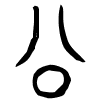
The bronze script of character Worry is

A person who is worried, raises his hands, seems to say:"What can I do?". 

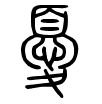
The big seal script of the character is

The two L alike on the left are two arms up, the middle 日 alike is the face, the up arrow is unclear. The bottom 7 alike is two legs. The two arms up is an action of the person in worrying mode. 

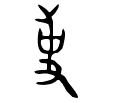
The small seal script of the character is

The top is the face, the inside of middle is character Heart (Post 24), the (   ) is a side view of body , the bottom is foot. It indicates that Worry is from heart, showing on the face. 

Let's see small seal script of character Love (Post 131)

The top is hand, the bottom is foot, they look very similar. The middle unsymmetrical curves is a side view of a body, the right curve is much longer, which is the body + legs. The corresponding part of character Worry symmetrical curves means that the person squats down, which indicates that he is too worried to be stand up. 

The clerical script of the character is
The top is the face, the middle two short vertical lines connected each other with a horizontal line is the body. Right below is the character Heart - 心. The bottom is a foot. 

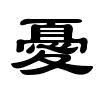
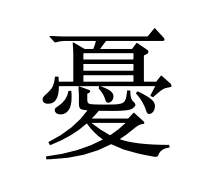
The traditional song typeface of the character is

Same as the clerical script.

The simplified song typeface of the character is

which is another character existed long time ago. The right one means: special, extreme, hate, etc, no worry. Both are pronounced You1, which may be the reason why 忧 is chosen to be the simplified form of 憂. 

There is another character Worry - 虑 (Post 496). What is the difference between the two?

忧(憂)is pure Worry, or deep Worry. 虑 is less worry but some pressure, also 虑 means "Think seriously", "Long time thinking" for some important thing. The combination of the two 忧虑 is used very often, means Worry. 


Wednesday, September 7, 2022

Amazing Chinese Characters (532) Thing - 事

 The bronze script of character Thing is 

Same as character Official - 吏 (Post 540). In ancient time, this character means official too. Official is the person who do the daily work, the things. So the two characters are from the same origin.

The big seal script of the character is 
Same as the character Official.

The small seal script of the character is 

Compare it with the small seal script of character Official

The difference is that the middle vertical line of character Thing run though from top to the bottom, that line in  character Official - 吏 stops in the top of the hand, middle of the character, indicating to do all things.

The clerical script of the character is 

similar to its small seal script.

The pinyin of the character is Shi4.
事 is lower level official, but may be higher than 吏. Besides, 事 is most used for Things now, not the person who execute the Things.